
Winterstorm

While the danger from winter weather varies across the country, nearly all Americans, regardless of where they live, are likely to face some type of severe winter weather at some point in their lives.

Winter Storm Preparedness Checklist


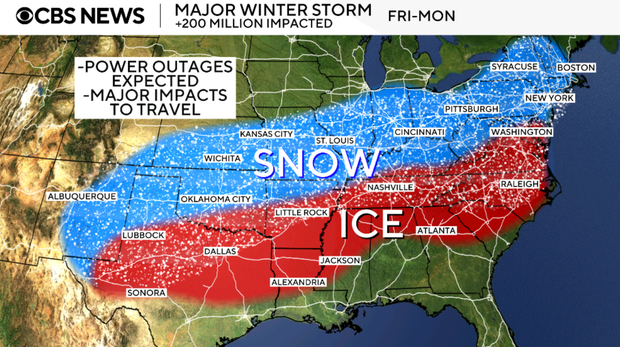
Source: https://www.cbsnews.com/news/maps-winter-storm-snow-cold-weekend/ for Friday-Monday, January 23-26, 2026
BE READY FOR WINTER STORMS 

  • Stay informed and tuned into local stations. 
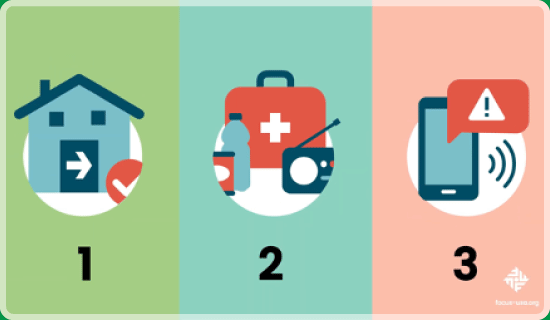
  • Have an emergency plan and basic supplies ready.
  • Know how to shut off your home’s water to prevent burst pipe damage.
  • Stay indoors and dress warmly in layers.
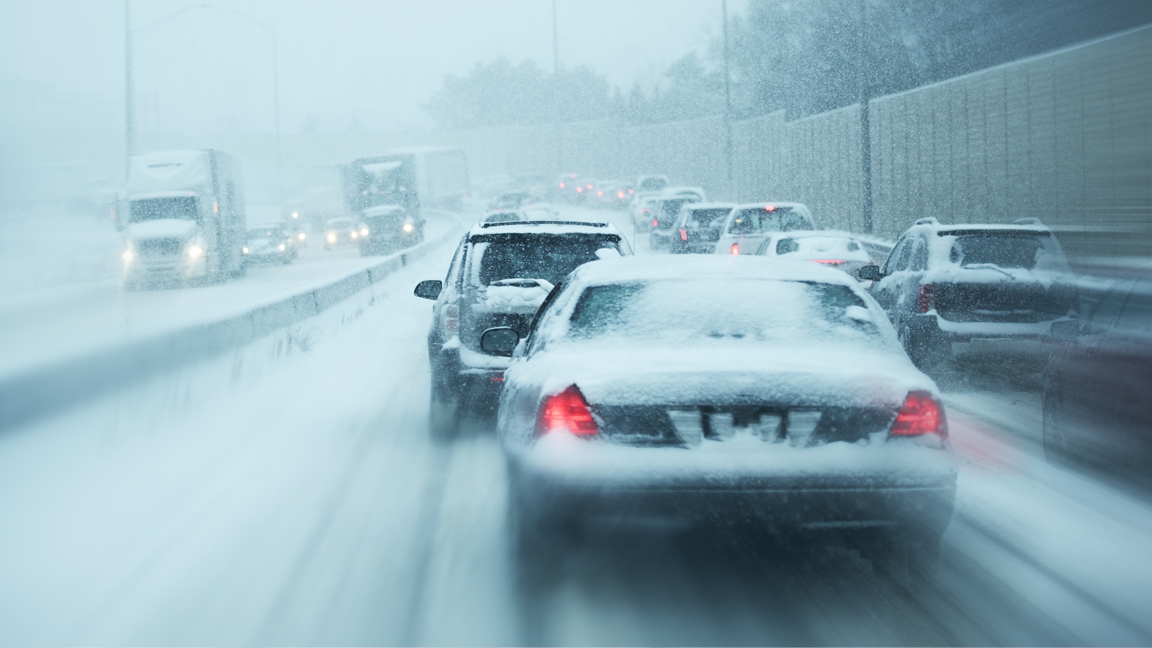
  • Stay off roads. If you must drive, stay cautious. 
  • Walk slowly on snowy or icy sidewalks, as hidden ice can be hard to see.
  • Check on your neighbors.
  • Remember: Ice & snow means take it slow. 

PREPARE FOR POWER OUTAGES 

  • Keep all cellphones fully charged. 
  • Check flashlights and have ample batteries. 
  • Fill gas tanks or fully charge electric vehicles.  
  • Keep refrigerator doors closed as much as possible. 

    WINTER DRIVING SAFETY  
    If travel is necessary:  

    • Fuel or charge your vehicle fully. 
    • Clear all snow and ice from your vehicle. 
    • Buckle up and stay focused. 
    • Drive slowly and keep a safe distance. 
    • Watch for ice on bridges, ramps, and overpasses. 
    • If you skid, ease off the gas and steer calmly. 
    • Carry a car emergency kit with warm supplies. 
    • If visibility becomes unsafe, pull over safely and wait. 
    • Remember: Ice & snow means take it slow. 

      PREVENT FROZEN PIPES 

      • Locate your main water shut-off valve now. 
      • Disconnect and drain outdoor hoses and sprinkler systems. 
      • Test heating systems before temperatures drop further. 
      • Allow faucets to drip gently overnight and during the coldest hours. 
      • Open sink cabinets and close crawl spaces to protect pipes. 
      • Secure outdoor items and bring in lightweight furniture. 
      • Take photos of your home, vehicles, and property for insurance documentation. 
      • To prepare for a winter storm you should do the following:
        • Before winter approaches, add the following supplies to your emergency kit:
          • Rock salt or more environmentally safe products to melt ice on walkways. Visit the Environmental Protection Agency for a complete list of recommended products.
          • Sand to improve traction.
          • Snow shovels and other snow removal equipment.
          • Sufficient heating fuel. You may become isolated in your home and regular fuel sources may be cut off. Store a good supply of dry, seasoned wood for your fireplace or wood-burning stove.
          • Adequate clothing and blankets to keep you warm.
        • Make a family emergency plan. Your family may not be together when disaster strikes, so it is important to know how you will contact one another, how you will get back together and what you will do in case of an emergency.
        • A NOAA Weather Radio broadcasts alerts and warnings directly from the NWS for all hazards. You may also sign up in advance to receive notifications from your local emergency services.
          Download FEMA’s Be Smart. Know Your Alerts and Warnings for a summary of notifications at: www.ready.gov/prepare. Free smart phone apps, such as those available from FEMA and the American Red Cross, provide information about finding shelters, providing first aid, and seeking assistance for recovery.
        • Minimize travel. If travel is necessary, keep a disaster supplies kit in your vehicle.
        • Bring pets/companion animals inside during winter weather. Move other animals or livestock to sheltered areas with non-frozen drinking water.
        KNOW THE TERMS

        Know the terms used to describe changing winter weather conditions and what actions to take. These terms can be used to determine the timeline and severity of an approaching storm. (Advisory / Watch / Warning). The NWS also issues advisories and warnings for other winter weather, including blizzards, freezes, wind chill, lake effect snow, and dense fog. Be alert to weather reports and tune in for specific guidance when these conditions develop.

        • Freezing Rain – Rain that freezes when it hits the ground, creating a coating of ice on roads, walkways, trees and power lines.
        • Sleet – Rain that turns to ice pellets before reaching the ground. Sleet also causes moisture on roads to freeze and become slippery.
        • Wind Chill– Wind-chill is the temperature it “feels like” when you are outside. The NWS provides a Wind-chill Chart to show the difference between air temperature and the perceived temperature and the amount of time until frostbite occurs. For more information, visit: nws.noaa.gov/om/windchill.
        • Winter Weather Advisory – Winter weather conditions are expected to cause significant inconveniences and may be hazardous. When caution is used, these situations should not be life threatening. The NWS issues a winter weather advisory when conditions are expected to cause significant inconveniences that may be hazardous. If caution is used, these situations should not be life-threatening.
        • Winter Storm Watch – A winter storm is possible in your area. Tune in to NOAA Weather Radio, commercial radio, or television for more information. The NWS issues a winter storm watch when severe winter conditions, such as heavy snow and/or ice, may affect your area but the location and timing are still uncertain. A winter storm watch is issued 12 to 36 hours in advance of a potential severe storm. Tune in to NOAA Weather Radio, local radio, TV, or other news sources for more information. Monitor alerts, check your emergency supplies, and gather any items you may need if you lose power.
        • Winter Storm Warning – A winter storm is occurring or will soon occur in your area.
        • Blizzard Warning – Sustained winds or frequent gusts to 35 miles per hour or greater and considerable amounts of falling or blowing snow (reducing visibility to less than a quarter mile) are expected to prevail for a period of three hours or longer.
        • Frost/Freeze Warning – Below freezing temperatures are expected.
      • Stay indoors during the storm.
      • Walk carefully on snowy, icy, walkways.
      • Avoid overexertion when shoveling snow. Overexertion can bring on a heart attack—a major cause of death in the winter. Use caution, take breaks, push the snow instead of lifting it when possible, and lift lighter loads.
      • Keep dry. Change wet clothing frequently to prevent a loss of body heat. Wet clothing loses all of its insulating value and transmits heat rapidly.
      • Signs of Frostbite: Occurs when the skin and body tissue just beneath it freezes. Loss of feeling and white or pale appearance in extremities, such as fingers, toes, earlobes, face, and the tip of the nose.
        What to Do: Cover exposed skin, but do not rub the affected area in an attempt to warm it up. Seek medical help immediately.
      • Signs of Hypothermia: Dangerously low body temperature. Uncontrollable shivering, memory loss, disorientation, incoherence, slurred speech, drowsiness, and apparent exhaustion.
        What to Do: If symptoms of hypothermia are detected take the person’s temperature. If it is below 95°, seek medical attention immediately. Get the victim to a warm location. Remove wet clothing. Warm the center of the body first by wrapping the person in blankets or putting on dry clothing. Give warm, non-alcoholic beverages if the victim is conscious. Seek medical help immediately.
      • The U.S. Centers for Disease Control and Prevention (CDC) recommends, if you detect symptoms of frostbite, seek medical care. Because frostbite and hypothermia both result from exposure, first determine whether the victim also shows signs of hypothermia. Hypothermia is a more serious medical condition and requires emergency medical assistance.
      • Drive only if it is absolutely necessary. If you must drive: travel in the day; don’t travel alone; keep others informed of your schedule; stay on main roads and avoid back road shortcuts.
      • Let someone know your destination, your route, and when you expect to arrive. If your car gets stuck along the way, help can be sent along your predetermined route.
      • If the pipes freeze, remove any insulation or layers of newspapers and wrap pipes in rags. Completely open all faucets and pour hot water over the pipes, starting where they were most exposed to the cold (or where the cold was most likely to penetrate).
      • Maintain ventilation when using kerosene heaters to avoid build-up of toxic fumes. Refuel kerosene heaters outside and keep them at least three feet from flammable objects.
      • Conserve fuel, if necessary, by keeping your residence cooler than normal. Temporarily close off heat to some rooms.
      • If you will be going away during cold weather, leave the heat on in your home, set to a temperature no lower than 55ºF.
        • If your home loses power or heat for more than a few hours or if you do not have adequate supplies to stay warm in your home overnight, you may want to go to a designated public shelter if you can get there safely. Text SHELTER + your ZIP code to 43362 (4FEMA) to find the nearest shelter in your area (e.g., SHELTER20472)
        • Bring any personal items that you would need to spend the night (such as toiletries, medicines). Take precautions when traveling to the shelter. Dress warmly in layers, wear boots, mittens, and a hat.
        • Continue to protect yourself from frostbite and hypothermia by wearing warm, loose-fitting, lightweight clothing in several layers. Stay indoors, if possible.

        Learn From Every Storm
        Restock your emergency supplies to be ready in case another storm hits.
        • Assess how well your supplies and family plan worked. What could you have done better?
        • Take a few minutes to improve your family plan and supplies before the next winter storm hits.
        • Talk to your neighbors and colleagues about their experiences and share tips with each other